

Synthetic Ingredients | Use, Risk, and Consideration

February 6, 2026

Written by Len Suzuki-Layhe
I’ve spent close to 30 years living with multiple skin conditions, which has shaped a deep personal interest in skin health and skincare ingredients. My writing draws on lived experience and ongoing research, with a focus on thoughtful, long-term care rather than quick fixes.
P.S. This content is based on personal experience and research and is not intended as medical advice.
Modern skincare has become increasingly complex, with formulations often relying on synthetic compounds, stabilisers, and performance driven additives. While many of these ingredients serve functional purposes, not all are suitable for every skin type. Certain chemicals, from aggressive surfactants to fragrance systems and preservative technologies, can disrupt the skin barrier, trigger irritation pathways, or contribute to long term sensitivity.
This post examines the science behind commonly debated synthetic ingredients, separating evidence from marketing noise. We explore how specific chemical classes interact with skin biology, where genuine risks may arise, and how informed formulation choices can better support skin health, resilience, and stability.
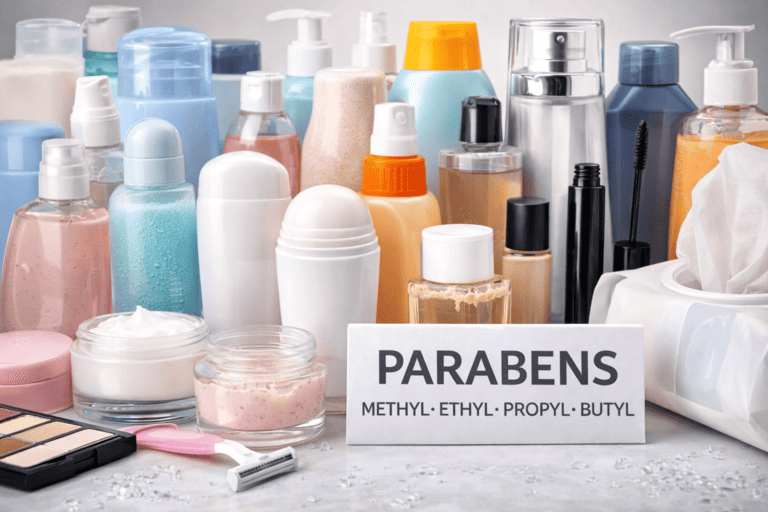
Parabens in Skincare
What it is:
Parabens are a class of synthetic preservatives widely used in cosmetic and personal care formulations. Their primary function is to inhibit the growth of bacteria, mould, and yeast, helping extend product shelf life and maintain safety during use. Due to their stability, cost efficiency, and broad spectrum antimicrobial performance, parabens have historically been one of the most commonly used preservation systems in skincare products.
Why they might be bad for you?
Parabens sit at the centre of a long-running conversation in cosmetic science. Their role as preservatives is well established, yet questions persist around how they interact with skin biology. Laboratory research has shown that certain parabens can mimic estrogen in very weak ways, which has prompted ongoing scrutiny around potential endocrine effects. Regulators consider approved concentrations safe, but safety does not automatically silence scientific curiosity or consumer concern.
The discussion is less about immediate harm and more about long-term exposure. Parabens can be absorbed through the skin, and their presence has been measured in human tissues. This does not prove damage, but it does raise reasonable questions about cumulative effects, particularly for individuals with compromised skin barriers or heightened sensitivity. In other words, the uncertainty lives in chronic exposure dynamics, not short-term toxicity.
Ultimately, this debate reflects a broader shift in how skincare is evaluated. Consumers are no longer satisfied with formulations that are merely compliant. There is increasing emphasis on barrier integrity, ingredient necessity, and biological compatibility — a more nuanced view of what “safe” should actually mean.
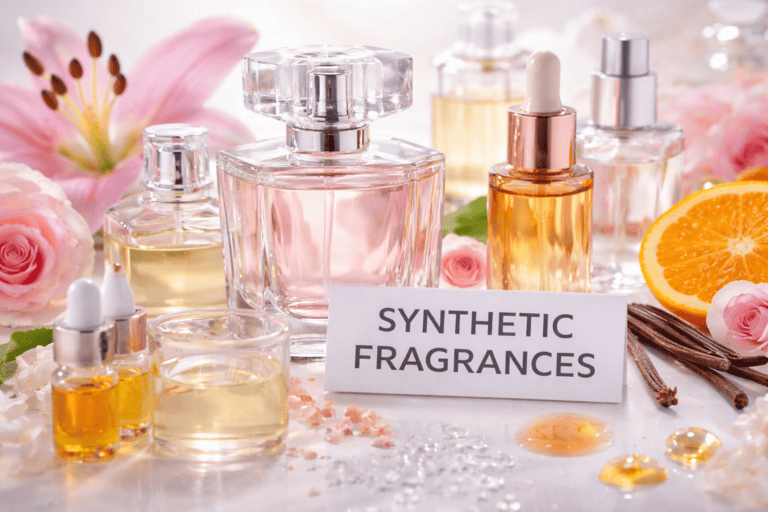
Synthetic Fragrance Explained
What it is:
Synthetic fragrances are engineered aromatic compounds used to impart scent in skincare and cosmetic formulations. Unlike fragrances derived directly from botanical sources, these molecules are created through controlled chemical processes to ensure consistency, stability, and performance. Fragrance systems typically consist of complex blends of multiple aromatic ingredients designed to replicate natural aromas or create entirely new scent profiles. Their primary function is sensory enhancement, contributing to product experience, brand identity, and overall consumer perception within modern cosmetic formulations.
Why they might be bad for you?
Synthetic fragrances are typically composed of complex blends of aromatic chemicals, many of which remain undisclosed under the generic labelling of “fragrance” or “parfum.” This limited transparency creates challenges for consumers attempting to understand what is being applied to the skin. Within dermatological research, fragrance compounds are consistently recognised as one of the most common triggers of skin irritation and allergic contact reactions, particularly in individuals with sensitive or compromised skin barriers.
P.S. The term “parfum” on an ingredient list does not automatically indicate synthetic origin. It is a regulatory umbrella term that can refer to blends derived from natural sources, synthetic compounds, or a combination of both. However, because it does not disclose the specific composition, it is an area that warrants closer scrutiny for those seeking full transparency.
Certain fragrance molecules are known to act as sensitising agents, meaning repeated exposure may increase the likelihood of reactivity over time. For some individuals, this can manifest as redness, discomfort, inflammation, or heightened skin sensitivity. Beyond topical effects, some fragrance ingredients have also attracted scientific attention due to their potential biological activity in laboratory settings, including interactions with hormone signalling pathways. While regulatory frameworks assess ingredient safety at approved concentrations, questions surrounding cumulative exposure and individual variability continue to drive discussion.
Importantly, the debate is less about immediate toxicity and more about long term skin compatibility, sensitisation potential, and the complexities of repeated low dose exposure. As consumer awareness evolves, formulation preferences increasingly emphasise barrier integrity, tolerability, and ingredient transparency.
Rethinking Mineral Oil
What it is:
Mineral oil is a highly refined, petroleum derived ingredient widely used in skincare formulations for its occlusive and protective properties. It functions by forming a barrier on the skin’s surface, helping reduce transepidermal water loss and supporting moisture retention. Due to its chemical stability, inert behaviour, and low reactivity, mineral oil has been extensively used across cosmetic, dermatological, and pharmaceutical products. When properly refined for cosmetic use, it is purified to remove impurities, resulting in a colourless, odourless substance valued for its consistency and formulation reliability.
Why they might be bad for you?
Mineral oil often appears under various nomenclatures depending on regulatory region and formulation context:
• Mineral Oil
• Paraffinum Liquidum
• Liquid Paraffin
• White Mineral Oil
• Petrolatum (related occlusive, different structure)
• Microcrystalline Wax (structurally related, semi-solid)
Mineral oil is widely regarded as safe within cosmetic science, yet its use continues to generate discussion, particularly in the context of skin physiology and formulation philosophy. As an occlusive agent, mineral oil forms a surface barrier that reduces moisture loss. While this can be beneficial for preventing dehydration, some argue that excessive occlusion may interfere with the skin’s natural regulatory processes, especially in individuals prone to congestion or imbalance.
One area of debate centres on its non-biological origin and inert nature. Unlike plant derived lipids that may contribute nutrients or bioactive compounds, mineral oil functions primarily as a passive barrier. For certain skin types, particularly those susceptible to clogged pores or breakouts, this occlusive film may contribute to feelings of heaviness or reduced skin breathability. It is important to note that this is largely dependent on formulation context, concentration, and individual skin behaviour.
The broader discussion often reflects differing perspectives on ingredient preference rather than established toxicity concerns. Questions tend to focus on long term skin compatibility, sensory experience, and alignment with evolving consumer expectations around formulation minimalism and biological synergy.
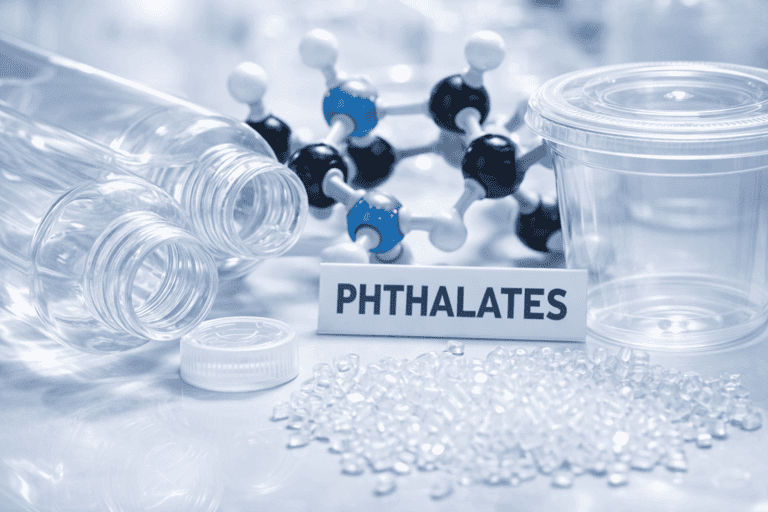
The Phthalate Debate
What it is:
Phthalates are a class of synthetic chemical compounds widely used as plasticisers and solvents in various industrial and consumer products, including cosmetic formulations. In personal care products, they are most commonly associated with fragrance systems, where they may function as carriers, stabilisers, or agents that help prolong scent performance. Their chemical properties allow them to influence texture, flexibility, and formulation stability, contributing to overall product consistency and sensory experience. Due to their functional versatility, phthalates have historically appeared in products such as perfumes, lotions, nail polishes, and hair sprays, sometimes present within proprietary fragrance blends under general labelling terms rather than being individually disclosed.
Why they might be bad for you?
Phthalates have become a recurring topic of discussion within cosmetic and toxicological research due to their potential biological activity. Certain phthalates have demonstrated the ability to interact with endocrine pathways under laboratory conditions, which has prompted ongoing evaluation of their long term effects. While not all phthalates behave identically, some compounds within this class have raised questions regarding hormone signalling, reproductive health markers, and cumulative exposure dynamics.
In cosmetic applications, the concern is less about immediate skin reactions and more about systemic exposure considerations. Phthalates can be absorbed through multiple pathways, including dermal contact and inhalation, particularly in products involving fragrance systems. Their detection in human tissues has contributed to continued scientific interest, although presence alone does not establish harm. Regulatory frameworks restrict or prohibit specific phthalates based on evolving safety data, yet research into chronic low dose exposure remains an active area of study.
The broader debate reflects the complexities of modern risk assessment, where ingredient safety is evaluated not only by toxicity thresholds but also by exposure patterns, biological interactions, and individual variability. As formulation philosophies evolve, emphasis increasingly shifts toward precautionary design, transparency, and long term compatibility.
A Closer Look at PFAS
What it is:
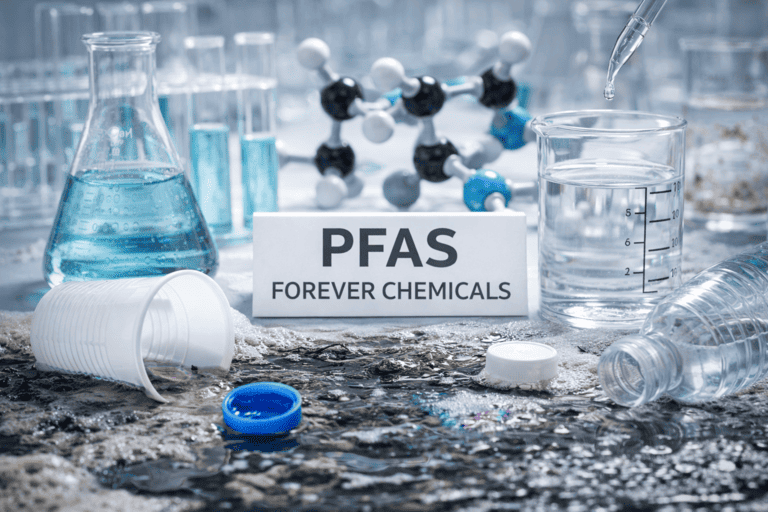
PFA, more commonly known in scientific literature as PFAS (per and polyfluoroalkyl substances), are a class of synthetic fluorinated compounds engineered for their exceptional chemical stability and resistance properties. In cosmetic and personal care formulations, these substances have historically been used to enhance texture, spreadability, water resistance, and overall product durability. Their molecular structure, defined by strong carbon fluorine bonds, makes them highly resistant to degradation, which contributes to their performance characteristics. Within skincare and beauty products, PFA related compounds may influence sensory attributes such as smooth application, film forming behaviour, and extended wear, leading to their presence in products ranging from foundations and sunscreens to mascaras and lotions.
Why they might be bad for you?
PFA have attracted increasing scrutiny due to their exceptional persistence and potential biological interactions. Their chemical stability, while valuable for product performance, also means these compounds degrade very slowly, leading to concerns about accumulation within the body and the environment. Certain studies have suggested that prolonged exposure to specific compounds within this class may be associated with effects on hormone signalling, immune response, and metabolic processes. Although association does not establish direct causation, the detection of these substances in human tissues has intensified scientific and regulatory interest.
From a skincare perspective, the discussion is less about immediate irritation and more about long term exposure dynamics. PFA may enter the body through multiple pathways, including dermal contact and incidental ingestion, particularly in products designed for frequent or prolonged use. Their ability to persist has raised questions regarding cumulative exposure and how repeated low dose contact may influence biological systems over time.
Importantly, the debate reflects evolving research rather than definitive conclusions. Regulatory bodies continue to reassess specific compounds as new safety data emerges, while formulation philosophies increasingly prioritise precaution, environmental considerations, and long term compatibility.
References
Parabens
Synthetic Fragrances
Mineral Oil
Phthalates
PFAS
FEB 2026: https://en.wikipedia.org/wiki/PFAS
You May Also Like…

Carrier Oils for Skin | Benefits and Uses
Written by Plant-derived oils have long played a central role in skincare, valued for their ability to nourish and…

Essential Oils | History, Science, and Skin Benefits
Written by Essential oils have been the backbone of natural skincare for thousands of years – not because of trends,…