


Our skin is the largest organ of the human body — a dynamic biological system made up of lipids, cells, and microflora constantly working to protect, repair, and regulate itself. Beneath the surface, processes like inflammation control, barrier reinforcement, and cellular turnover determine how healthy and resilient our skin truly is. Every minute, thousands of skin cells are shed and replaced, revealing just how active and adaptive this system is. This post takes a closer look at those mechanisms, breaking down the science behind skin behaviour and how targeted ingredients interact with its biology to restore balance, strength, and long-term stability.


Epidermis
What it is:
The epidermis is the outermost layer of the skin and serves as the body’s first point of contact with the external environment. It acts as a protective shield against physical damage, pollution, bacteria, and moisture loss, while continuously renewing itself to maintain a strong surface barrier. This layer also plays a critical role in early threat detection, using specialised immune cells to identify harmful microbes and trigger protective responses before deeper layers are affected.
Importance for the skin:
-
Forms a protective barrier against environmental stressors and pathogens
-
Detects potential threats and initiates immune responses
-
Regulates moisture retention and prevents excessive water loss
-
Contributes to skin tone texture and surface smoothness
-
Supports ongoing skin renewal and repair
Impact when compromised:
When the epidermis is weakened, the skin becomes more vulnerable to environmental damage and irritation. A compromised barrier can lead to increased moisture loss, dryness, sensitivity, and inflammation. The skin may struggle to defend itself against bacteria and pollutants, resulting in slower recovery, uneven texture, and a higher likelihood of flare ups or discomfort.
- Increased sensitivity to irritants and allergens
- Higher transepidermal water loss leading to dryness and tightness
- Reduced ability to defend against bacteria and pollution
- Dull appearance and uneven skin texture
- Slower repair and recovery from stress
Properties that help:
The epidermis responds directly to topical care, making barrier focused ingredients essential for maintaining its protective and immune sensing functions. Supporting hydration, lipid balance, and calmness at the surface helps keep this layer resilient and effective.
- Humectants such as glycerin and aloe to support hydration
- Barrier supporting lipids such as ceramides and plant oils to reinforce the skin surface
- Soothing actives such as oat extract and panthenol to calm irritation and support defence mechanisms

Dermis
What it is:
The dermis sits beneath the epidermis and forms the skin’s structural and functional core. It is rich in collagen and elastin, which give the skin strength, elasticity, and resilience. This layer contains blood vessels, nerves, hair follicles, sweat glands, and sebaceous glands, allowing it to support circulation, sensation, temperature regulation, and repair. The dermis also plays a vital role in immune defence and threat detection, housing specialised cells that monitor for injury, infection, and inflammation while coordinating protective and healing responses.
Importance for the skin:
- Provides strength, elasticity, and structural support
- Supplies oxygen and nutrients through an extensive blood vessel network
- Enables sensory perception including touch, pressure, pain, and temperature
- Detects threats such as injury or infection and triggers immune responses
- Regulates body temperature through blood flow and sweat production
- Supports wound healing and tissue repair
Impact when compromised:
When the dermis is weakened, the skin loses firmness and resilience, and its ability to repair and defend itself is reduced. Sensory signalling and circulation may become less efficient, leading to slower healing, increased sensitivity, and a decline in overall skin vitality.
- Loss of firmness and elasticity leading to fine lines and sagging
- Slower wound healing and reduced repair capacity
- Increased sensitivity or altered sensation
- Weakened immune responses and reduced defence against stress
- Dull tone due to impaired circulation
Properties that help:
The dermis cannot be reached directly by topical ingredients, but its function is supported by maintaining a strong barrier and healthy surface environment. Reducing surface inflammation and supporting hydration helps optimise dermal signalling, repair processes, and long term resilience.
- Barrier supporting ingredients to reduce stress on deeper layers
- Hydrating compounds that support repair and communication within the skin
- Soothing actives such as oat extract and bisabolol to calm inflammatory responses and support recovery

Hypodermis (Subcutaneous)
What it is:
The hypodermis, also known as the subcutaneous layer, is the deepest layer of the skin and is primarily composed of adipose fat and connective tissue. It anchors the skin to underlying muscles and structures while acting as the body’s main cushioning and insulation system. This layer plays a key role in energy storage, shock absorption, and temperature stability, and supports larger blood vessels and nerve pathways that connect the skin to the rest of the body.
Importance for the skin:
-
Provides insulation to help regulate body temperature
-
Absorbs physical shock and protects deeper tissues and organs
-
Anchors the skin and supports overall structural stability
-
Supports major blood vessels and nerves supplying the upper layers
-
Contributes to skin volume, softness, and contour
Impact when compromised:
When the hypodermis is reduced or weakened, the skin can lose fullness and support, becoming more prone to sagging and discomfort. Reduced insulation and cushioning may also increase sensitivity to cold, pressure, and mechanical stress, affecting overall skin comfort and resilience.
- Loss of volume leading to sagging and reduced firmness
- Increased sensitivity to cold and external stress
- Reduced cushioning causing discomfort or pressure sensitivity
- Decline in overall skin flexibility and support over time
Properties that help:
The hypodermis sits too deep for topical ingredients to reach directly, but its function can be supported by maintaining healthy layers above. Strong barrier care and surface hydration help reduce stress on this layer and preserve its protective role.
- Occlusives such as shea butter and mango butter to limit moisture loss
- Barrier supporting oils such as jojoba oil, almond oil, and rice bran oil to reinforce skin structure
- Soothing actives such as oat extract and bisabolol to help calm the skin and reduce inflammatory stress
Stratum Corneum & Sweat Pores
What it is:
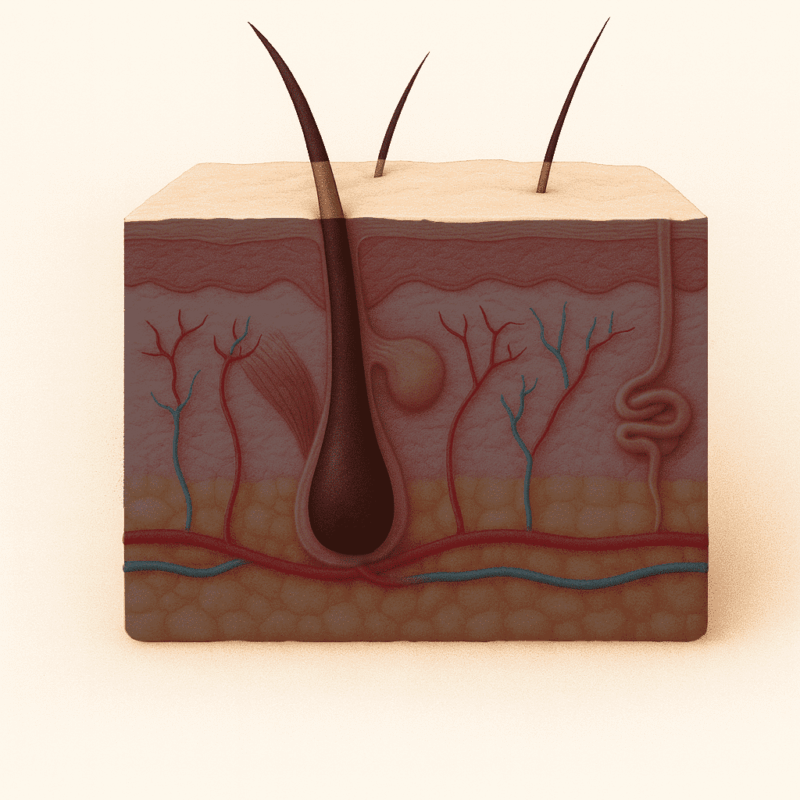
The stratum corneum is the outermost layer of the epidermis and forms the skin’s primary protective barrier. It is composed of dead, keratin filled cells known as corneocytes, which are tightly packed and embedded in a lipid matrix. These cells act as a physical shield, protecting the skin from pathogens, environmental pollutants, and physical damage while limiting moisture loss. Sweat pores are microscopic openings within this layer that allow sweat from underlying glands to reach the surface, supporting temperature regulation and surface balance while working in coordination with the stratum corneum to defend the skin.
Importance for the skin:
- Forms the main defence against pathogens and environmental damage
- Regulates moisture retention and prevents excessive water loss
- Supports temperature control through sweat release
- Contributes to a healthy acid mantle and balanced microbiome
Impact when compromised:
When the stratum corneum is weakened or sweat pores become blocked, the skin barrier and cooling mechanisms are disrupted. This can result in increased moisture loss, dryness, sensitivity, irritation, and reduced protection against pathogens, as well as impaired temperature regulation and a higher risk of congestion.
- Increased transepidermal water loss and dehydration
- Heightened sensitivity and irritation
- Reduced defence against bacteria and pollutants
- Impaired cooling and temperature control
- Increased likelihood of blocked pores and surface imbalance
Properties that help:
This layer responds directly to topical care, making barrier focused ingredients essential for maintaining surface health and normal sweat pore function.
- Humectants such as glycerin and aloe draw water into the stratum corneum, helping maintain flexibility and prevent cracking
- Barrier supporting lipids such as plant oils and ceramide like compounds reinforce the lipid matrix between corneocytes
- Mild occlusives such as shea butter reduce moisture loss without clogging pore openings
- Gentle exfoliating agents such as finely milled oats help prevent the buildup of dead cells around pores
- Soothing actives such as oat extract and panthenol help calm irritation and support healthy pore function

Sweat Glands
What it is:
Sweat glands are specialised structures located within the dermis that produce sweat to help regulate body temperature and maintain skin balance. There are two main types of sweat glands. Eccrine sweat glands are distributed across most of the body and release a watery sweat directly onto the skin surface for cooling through evaporation. Apocrine sweat glands are found in specific areas such as the underarms and groin and produce a thicker secretion that interacts with skin bacteria, contributing to natural body scent. Together, these glands support thermal regulation, surface hydration, and overall skin function.
Importance for the skin:
- Regulates body temperature through sweat production and evaporation
- Helps maintain surface hydration and comfort
- Supports the skin’s natural acid mantle
- Assists in the removal of metabolic waste
- Contributes to overall skin balance and resilience
Impact when compromised:
When sweat gland function is disrupted, the skin may struggle to regulate temperature and maintain surface balance. Reduced or blocked sweat flow can lead to overheating, irritation, dryness, or congestion, while imbalance in apocrine activity may increase discomfort or odour related concerns.
- Reduced ability to cool the body effectively
- Increased risk of irritation or heat related stress
- Disruption of surface hydration and comfort
- Higher likelihood of blocked pores or congestion
- Imbalance in skin surface conditions
Properties that help:
Sweat glands cannot be directly targeted by topical products, but maintaining a healthy epidermis and clear pore pathways supports normal sweat release and surface balance.
- Humectants such as glycerin to support surface hydration
- Barrier strengthening ingredients to maintain healthy pore openings
- Gentle exfoliating agents such as finely milled oats to prevent buildup around pores
- Soothing actives such as oat extract and panthenol to calm irritation and support comfort

Sebaceous Oil Glands
What it is:
Sebaceous oil glands are microscopic glands located within the dermis, most commonly attached to hair follicles. They produce sebum, a natural lipid rich substance that travels up the follicle and spreads across the skin’s surface. Sebum integrates with the stratum corneum to form a protective lipid layer, helping defend the skin against moisture loss, pathogens, and environmental stress while maintaining surface softness and flexibility.
Importance for the skin:
- Reinforces the skin barrier and supports the stratum corneum
- Reduces moisture loss and helps maintain hydration
- Softens and conditions the skin surface
- Provides mild antimicrobial protection
- Supports a balanced skin microbiome
Impact when compromised:
When sebaceous gland activity is too low, the skin can become dry, tight, and more prone to irritation due to a weakened surface barrier. When activity is excessive, sebum can mix with dead skin cells and block follicles, increasing the risk of congestion, imbalance, and surface irregularities.
- Dryness and barrier weakness when sebum is insufficient
- Increased sensitivity and moisture loss
- Congestion or blocked follicles when sebum is excessive
- Disruption of skin balance and texture
Properties that help:
Supporting healthy sebum balance helps maintain a resilient stratum corneum and comfortable skin surface.
- Jojoba Oil: Structurally mimics human sebum, "tricking" the glands into producing less oil while keeping the skin barrier flexible.
- Hyaluronic Acid: Provides essential non-greasy hydration to ensure the skin doesn't overcompensate for moisture loss with more oil.
- Aloe Vera: Balances the skin's natural pH and provides a cooling, anti-inflammatory effect that calms overactive oil glands.

Hair Root
What it is:
The hair root is the living part of the hair that sits deep within the skin, anchored inside the hair follicle. It is responsible for producing the hair shaft and is closely connected to blood vessels, nerves, and sebaceous glands. Through these connections, the hair root receives nutrients and signals needed for growth, sensation, and regulation, while also playing a role in temperature control by supporting the skin’s natural insulating response.
Importance for the skin:
- Anchors the hair securely within the skin
- Supports healthy hair growth through nutrient supply
- Helps distribute natural oils across the skin surface
- Contributes to temperature regulation and insulation
- Supports sensory feedback through nearby nerve endings
Impact when compromised:
When the hair root is weakened or stressed, hair growth can slow and hair may become thinner or more fragile. Disruption can also affect oil distribution and local skin balance, leading to increased sensitivity, dryness, or discomfort around the follicle.
- Reduced hair growth or thinning
- Weakened hair structure and breakage
- Impaired distribution of natural oils
- Increased sensitivity or irritation around follicles
Properties that help:
The hair root sits deep within the skin and cannot be reached directly by topical ingredients, but its function is supported by maintaining a healthy scalp or skin surface and a calm, well balanced follicle environment.
- GHK-Cu (Copper Peptides): Promotes angiogenesis (the formation of new blood vessels) around the hair root, ensuring maximum oxygen and nutrient delivery to the papilla.
- Rosemary & Peppermint Oil: Natural vasodilators that increase local microcirculation, effectively "opening" the nutrient pipeline to the hair root.
- L-Arginine: An amino acid precursor to nitric oxide, which helps relax blood vessels to improve the flow of metabolic fuel to the growing root.

Hair Follicle
What it is:
The hair follicle is a tunnel like structure in the skin that surrounds and supports the hair root and hair shaft. It extends from the epidermis deep into the dermis and acts as the production site for hair growth. The follicle connects closely with sebaceous glands, nerves, and blood vessels, allowing it to support hair formation, oil distribution, sensation, and local skin regulation.
Importance for the skin:
- Houses and produces the hair shaft
- Channels sebum from sebaceous glands to the skin surface
- Supports healthy hair growth and renewal cycles
- Contributes to sensation through surrounding nerve endings
- Plays a role in temperature regulation and skin protection
Impact when compromised:
When hair follicles become blocked, inflamed, or damaged, hair growth and skin balance can be disrupted. This may lead to irritation, uneven texture, congestion, or weakened hair structure, as well as reduced oil flow to the skin surface.
- Disrupted or slowed hair growth
- Increased risk of follicle irritation or inflammation
- Blockage leading to congestion or uneven skin texture
- Reduced distribution of natural oils
Properties that help:
The hair follicle benefits from ingredients that keep the follicle opening clear, support the surrounding skin barrier, and maintain a balanced surface environment that allows normal hair growth and oil flow.
- Peptides (e.g., Copper Tripeptide-1): Signal follicles to strengthen, boost keratin production, and reduce shedding.
- Biotin (Vitamin B7): Supports keratin infrastructure, enhancing follicle function and overall hair strength.
- Melatonin: A powerful antioxidant that supports healthy hair growth cycles and protects follicles from oxidative stress.

Nerves
What it is:
Nerves form an extensive communication network within the skin, primarily located in the dermis and extending toward the epidermis and hair follicles. They consist of specialised sensory and autonomic nerve fibres that constantly relay information between the skin and the brain. These nerves detect changes in the environment and internal state, allowing the skin to respond rapidly to touch, temperature, pressure, pain, and potential threats.
Importance for the skin:
- Enables sensation including touch, pressure, heat, cold, and pain
- Detects potential threats such as injury, extreme temperatures, or irritation
- Regulates blood vessel dilation and constriction, influencing skin colour and temperature
- Controls sweat and oil gland activity
- Supports wound healing and repair through signalling pathways
Impact when compromised:
When nerve function is impaired, the skin’s ability to sense and respond to its environment is reduced. This can lead to delayed reactions to damage, impaired circulation control, reduced sweat or oil production, and slower healing, ultimately weakening overall skin resilience and protection.
- Reduced sensation or altered sensitivity
- Increased risk of unnoticed injury or irritation
- Impaired temperature regulation
- Slower wound healing and recovery
- Disruption of skin balance and comfort
Properties that help:
While nerves cannot be directly targeted by topical products, maintaining a calm, well supported skin environment helps preserve healthy nerve signalling and responsiveness.
- Vitamin B6 & B12: Essential for overall nervous system function and often included in "nerve creams" to support cellular energy and repair.
- Magnesium: Helps facilitate normal neurotransmission and is increasingly used in 2025 face mists and mists to promote relaxation and calm hyper-reactive skin.
- Niacinamide (Vitamin B3): Beyond barrier repair, it supports healthy neurotransmitter pathways and reduces neuro-inflammation.

Adipose Fat Tissue
What it is:
Adipose fat tissue is a specialised connective tissue found primarily within the hypodermis. It is made up of fat cells that store energy and provide structural support beneath the skin. This tissue acts as a protective cushion, insulating the body from temperature extremes while helping maintain skin softness, volume, and contour. Adipose tissue also supports surrounding blood vessels and nerves, contributing to overall skin stability and comfort.
Importance for the skin:
- Provides insulation to help maintain stable body temperature
- Absorbs shock and protects underlying tissues and organs
- Supports skin volume, softness, and contour
- Stores energy that supports metabolic balance
- Helps anchor the skin to deeper structures
Impact when compromised:
When adipose fat tissue is reduced or weakened, the skin can lose fullness and cushioning. This may lead to sagging, increased sensitivity to pressure or cold, and reduced overall comfort and resilience.
- Loss of volume leading to sagging or hollowing
- Increased sensitivity to pressure and temperature changes
- Reduced cushioning and comfort
- Decline in skin support and flexibility over time
Properties that help:
Adipose tissue sits too deep for topical ingredients to reach directly, but its function is supported by maintaining strong, healthy layers above.
- Safflower Seed Oil: High in linoleic acid, it is used in modern "fat fitness" formulations to help replenish and balance fat cell populations.
- Thai Black Ginger: Acts as a fat modulator, helping to refine the size of bloated cells while encouraging new fat cell formation.
- Copper Peptides (GHK-Cu): While primarily for collagen, they support the underlying matrix that holds the fat tissue in place, preventing sagging.
Special Mention: Blood Vessels and Capillaries
What it is:
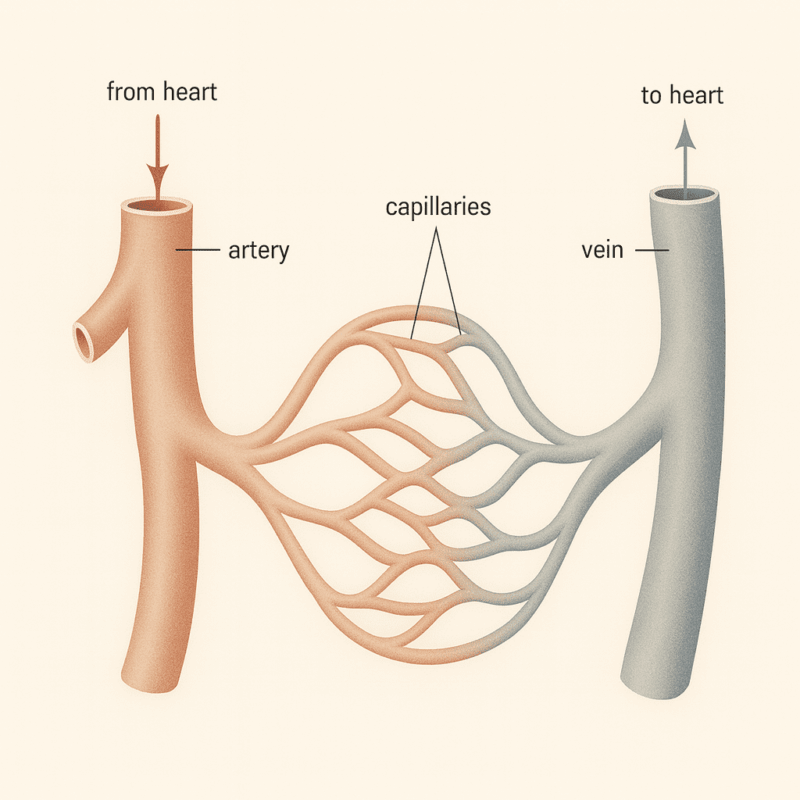
Blood vessels and capillaries form the skin’s circulatory network and are primarily located within the dermis and hypodermis. Larger blood vessels transport oxygen rich blood and nutrients into the skin, while capillaries are fine, delicate vessels that branch close to the epidermis. Together, they sustain skin cells, remove waste products, and enable rapid responses to temperature changes, injury, and repair needs.
Importance for the skin:
- Delivers oxygen and nutrients essential for healthy skin function
- Removes metabolic waste and supports cellular turnover
- Regulates skin temperature through controlled blood flow
- Influences skin tone, radiance, and vitality
- Supports wound healing and tissue repair
Impact when compromised:
When blood flow or capillary function is reduced, the skin may appear dull, feel colder, and heal more slowly. Impaired circulation can also weaken the skin’s ability to respond to stress, injury, and environmental changes.
- Dull or uneven skin tone
- Slower healing and reduced repair capacity
- Increased sensitivity to temperature changes
- Reduced skin vitality and resilience
Properties that help:
While blood vessels cannot be directly targeted by topical products, maintaining a healthy skin environment supports optimal circulation and function.
- Ceramides: Skin-identical lipids that rebuild the protective barrier to prevent water loss and protect underlying capillaries.
- Omega-3 & Omega-6 Fatty Acids: Found in oils like Rosehip, Evening Primrose, and Borage, these replenish the lipid matrix and reduce internal inflammation.
- Squalane: Mimics natural sebum to protect and hydrate without irritation, strengthening the skin's resilience.
- Panthenol (Pro-vitamin B5): Supports the production of essential skin lipids and calms existing irritation
References
Human Skin
DEC 2025: https://en.wikipedia.org/wiki/Human_skin
Jun 2024: https://www.ncbi.nlm.nih.gov/books/NBK470464/