

Carrier Oils for Skin | Benefits and Uses
March 15, 2026

Written by Len Suzuki-Layhe
I’ve spent close to 30 years living with multiple skin conditions, which has shaped a deep personal interest in skin health and skincare ingredients. My writing draws on lived experience and ongoing research, with a focus on thoughtful, long-term care rather than quick fixes.
P.S. This content is based on personal experience and research and is not intended as medical advice.
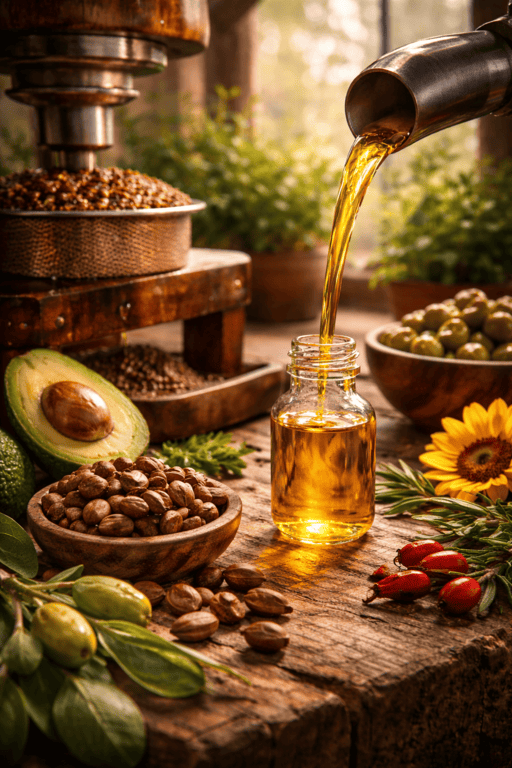
Plant-derived oils have long played a central role in skincare, valued for their ability to nourish and protect the skin while supporting its natural balance. Known as carrier oils, these lipid-rich extracts are pressed from seeds, nuts, and fruits, delivering essential fatty acids, antioxidants, and nutrients that help maintain healthy skin.
In this article, we explore several widely used carrier oils and the science behind their benefits. Understanding the composition and function of these oils provides insight into how they support hydration, reinforce the skin barrier, and enhance overall skin resilience.
Sweet Almond Oil in Skincare
What it is:
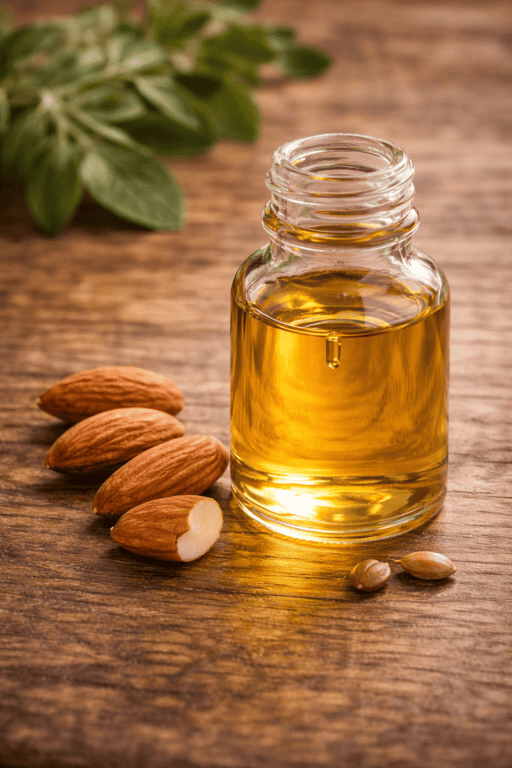
Sweet almond oil, derived from the seeds of Prunus amygdalus dulcis, is a widely used botanical carrier oil in skincare and body care formulations. Extracted through cold pressing, the oil contains a high concentration of fatty acids, particularly oleic and linoleic acid, along with naturally occurring vitamin E and phytosterols.
Its balanced lipid profile makes sweet almond oil a versatile emollient that helps soften the skin while supporting the skin’s natural barrier. Due to its mild nature and smooth texture, it has historically been used in body oils, massage formulations, and moisturising treatments designed to improve skin comfort and hydration.
Why it benefits the skin
Sweet almond oil functions primarily as an emollient, meaning it helps smooth and soften the skin by filling microscopic gaps between skin cells. This process improves the skin’s surface texture while reducing transepidermal water loss, allowing the skin to retain moisture more effectively.
Its fatty acid composition also contributes to maintaining the integrity of the stratum corneum, the outermost layer of the skin responsible for barrier protection. By reinforcing this lipid layer, sweet almond oil can help support overall skin resilience and reduce dryness or roughness.
In addition, naturally occurring antioxidants such as vitamin E contribute to protecting the skin from oxidative stress caused by environmental exposure.
Role in formulations
In skincare formulations, sweet almond oil often serves as a primary carrier oil, forming the foundation of oil-based products. It blends well with lighter oils such as grapeseed oil as well as richer botanical oils like marula or moringa.
This flexibility allows formulators to adjust the texture, absorption speed, and nutrient profile of a blend while maintaining skin compatibility and stability.

Grapeseed Oil: Rich In Oleic Acid
What it is:
Grapeseed oil, derived from the seeds of Vitis vinifera, is a lightweight botanical carrier oil commonly used in skincare formulations and body oils. The oil is typically obtained as a by-product of the winemaking process and refined for cosmetic use, producing a clear, fast-absorbing oil with a mild texture.
Grapeseed oil is particularly valued for its high linoleic acid content, an essential fatty acid that plays an important role in maintaining the skin’s barrier function. It also contains naturally occurring antioxidants such as polyphenols and vitamin E compounds, which contribute to its protective properties in skincare.
Because of its light consistency and rapid absorption, grapeseed oil is often used in formulations designed to hydrate the skin without leaving a heavy or greasy residue.
Why it benefits the skin
Sweet almond oil functions primarily as an emollient, meaning it helps smooth and soften the skin by filling microscopic gaps between skin cells. This process improves the skin’s surface texture while reducing transepidermal water loss, allowing the skin to retain moisture more effectively.
Its fatty acid composition also contributes to maintaining the integrity of the stratum corneum, the outermost layer of the skin responsible for barrier protection. By reinforcing this lipid layer, sweet almond oil can help support overall skin resilience and reduce dryness or roughness.
In addition, naturally occurring antioxidants such as vitamin E contribute to protecting the skin from oxidative stress caused by environmental exposure.
Role in formulations
In skincare formulations, sweet almond oil often serves as a primary carrier oil, forming the foundation of oil-based products. It blends well with lighter oils such as grapeseed oil as well as richer botanical oils like marula or moringa.
This flexibility allows formulators to adjust the texture, absorption speed, and nutrient profile of a blend while maintaining skin compatibility and stability.
Moringa Oil: A Nutrient-Rich Botanical Oil
What it is
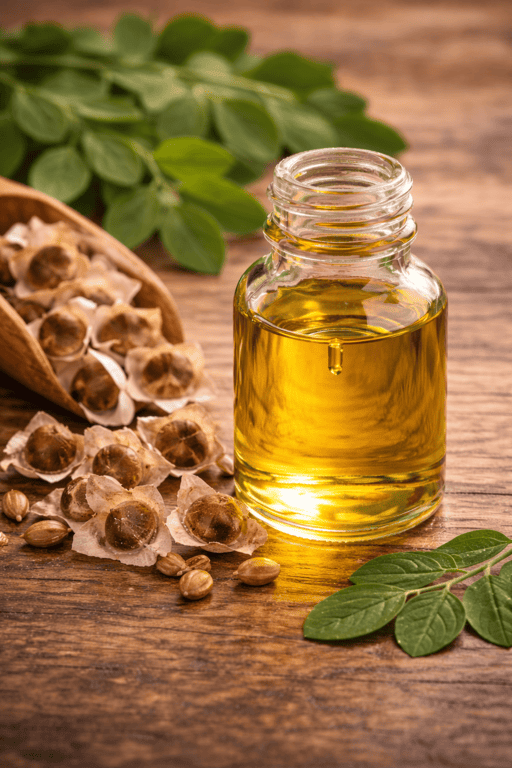
Moringa oil, extracted from the seeds of Moringa oleifera, is a botanical oil known for its exceptional stability and nutrient density. Often referred to historically as “ben oil,” it has been used for centuries in skincare and cosmetic preparations because of its resistance to oxidation and smooth skin feel.
The oil is particularly rich in oleic acid, a fatty acid that contributes to skin softness and flexibility. It also contains naturally occurring antioxidants, including tocopherols and plant sterols, which support skin conditioning and help protect the oil itself from degradation.
Because of its balanced lipid composition and stability, moringa oil is frequently used in skincare formulations designed to provide nourishment and long-lasting hydration.
Why it benefits the skin
Moringa oil acts primarily as a conditioning emollient, helping soften the skin and support the integrity of the outer skin barrier. Its high oleic acid content allows it to spread easily across the skin while enhancing moisture retention.
The presence of naturally occurring antioxidants also helps defend the skin from oxidative stress caused by environmental exposure, contributing to healthier-looking skin over time.
Additionally, the oil’s natural stability makes it a valuable component in formulations that aim to maintain both performance and shelf life.
Role in formulations
Within skincare formulations, moringa oil is often used as a nutrient-dense supporting oil that enhances the conditioning properties of a blend. It works particularly well alongside lighter oils such as grapeseed oil while complementing richer oils like sweet almond or marula oil.
Because of its stability and nourishing lipid profile, moringa oil helps improve both the performance and durability of oil-based skincare products.
Marula Oil: A Silky, Antioxidant-Rich Carrier Oil
What it is
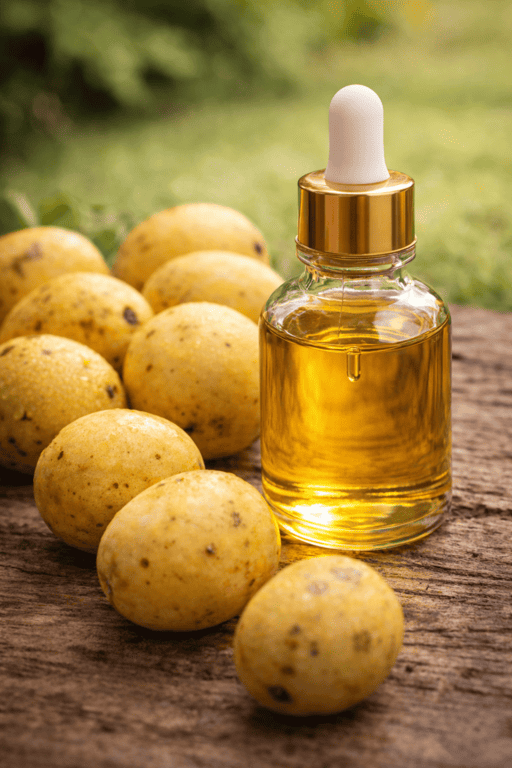
Marula oil is extracted from the seeds of the Sclerocarya birrea tree, which is native to southern Africa. Traditionally used in skin and hair care, the oil has become widely recognised in modern cosmetic formulations for its smooth texture and high antioxidant content.
The oil is particularly rich in oleic acid, a fatty acid known for its ability to soften and condition the skin. In addition, marula oil contains naturally occurring antioxidants such as tocopherols and flavonoids, which help support skin health and protect against environmental stress.
Because of its light yet nourishing profile, marula oil is often incorporated into skincare products designed to improve skin softness and maintain long-lasting hydration.
Why it benefits the skin
Marula oil functions primarily as an emollient, helping to soften the skin and support the outer lipid barrier. Its fatty acid profile allows it to spread easily across the skin, improving moisture retention while maintaining a lightweight feel.
The presence of antioxidant compounds also contributes to protecting the skin from oxidative stress caused by environmental exposure. These properties make marula oil particularly valuable in formulations intended to support skin elasticity and resilience.
Its naturally smooth texture allows it to deliver nourishment without leaving an overly heavy or greasy finish.
Role in formulations
Within skincare formulations, marula oil is often used as a premium supporting oil, helping enhance the texture and conditioning properties of a blend. It pairs well with lighter oils such as grapeseed oil and complements nutrient-rich oils like moringa or sweet almond oil.
Because of its smooth glide and antioxidant profile, marula oil is frequently included in facial oils, body oils, and luxury skincare blends where both performance and sensory experience are important.
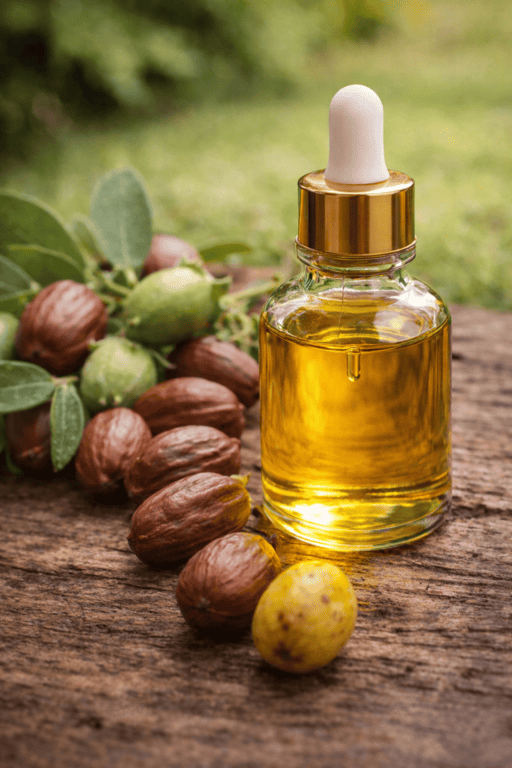
Jojoba Oil: A Liquid Wax That Mimics Skin Sebum
What it is
Jojoba oil, extracted from the seeds of Simmondsia chinensis, is technically not a true oil but a liquid wax ester. Its chemical structure closely resembles the natural sebum produced by human skin, which makes it highly compatible with the skin’s lipid barrier.
Because of this similarity, jojoba oil has long been used in skincare formulations designed to maintain skin balance and hydration. The oil also contains naturally occurring vitamin E compounds and plant sterols, which contribute to its conditioning and protective properties.
Jojoba oil is also exceptionally stable compared with many other botanical oils, meaning it resists oxidation and maintains its quality over time.
Why it benefits the skin
Jojoba oil helps support the skin primarily by mimicking the function of natural sebum. This allows it to help regulate moisture levels while maintaining the flexibility and integrity of the skin barrier.
Its lightweight texture allows it to spread easily across the skin while delivering conditioning benefits without clogging pores or leaving a heavy residue.
Because it is structurally similar to the lipids found naturally in the skin, jojoba oil is widely considered one of the most skin-compatible botanical ingredients used in skincare formulations.
Role in formulations
Within skincare formulations, jojoba oil is often used as a balancing carrier oil that helps stabilise blends while improving skin compatibility. Its stability and smooth skin feel make it an excellent complement to oils such as grapeseed, almond, moringa, and marula oil.
Because of its versatility and compatibility with the skin’s natural lipids, jojba oil is frequently included in facial oils, body oils, and moisturising formulations designed to deliver balanced hydration.
References
Wiki
Almond Oil
Grapeseed Oil
Marula Oil
Jojoba Oil
You May Also Like…

Synthetic Ingredients | Use, Risk, and Consideration
Written by Modern skincare has become increasingly complex, with formulations often relying on synthetic compounds,…

Essential Oils | History, Science, and Skin Benefits
Written by Essential oils have been the backbone of natural skincare for thousands of years – not because of trends,…

Our Skin | Structure, Function, and Biological Systems
Written by Our skin is the largest organ of the human body — a dynamic biological system made up of lipids, cells, and…